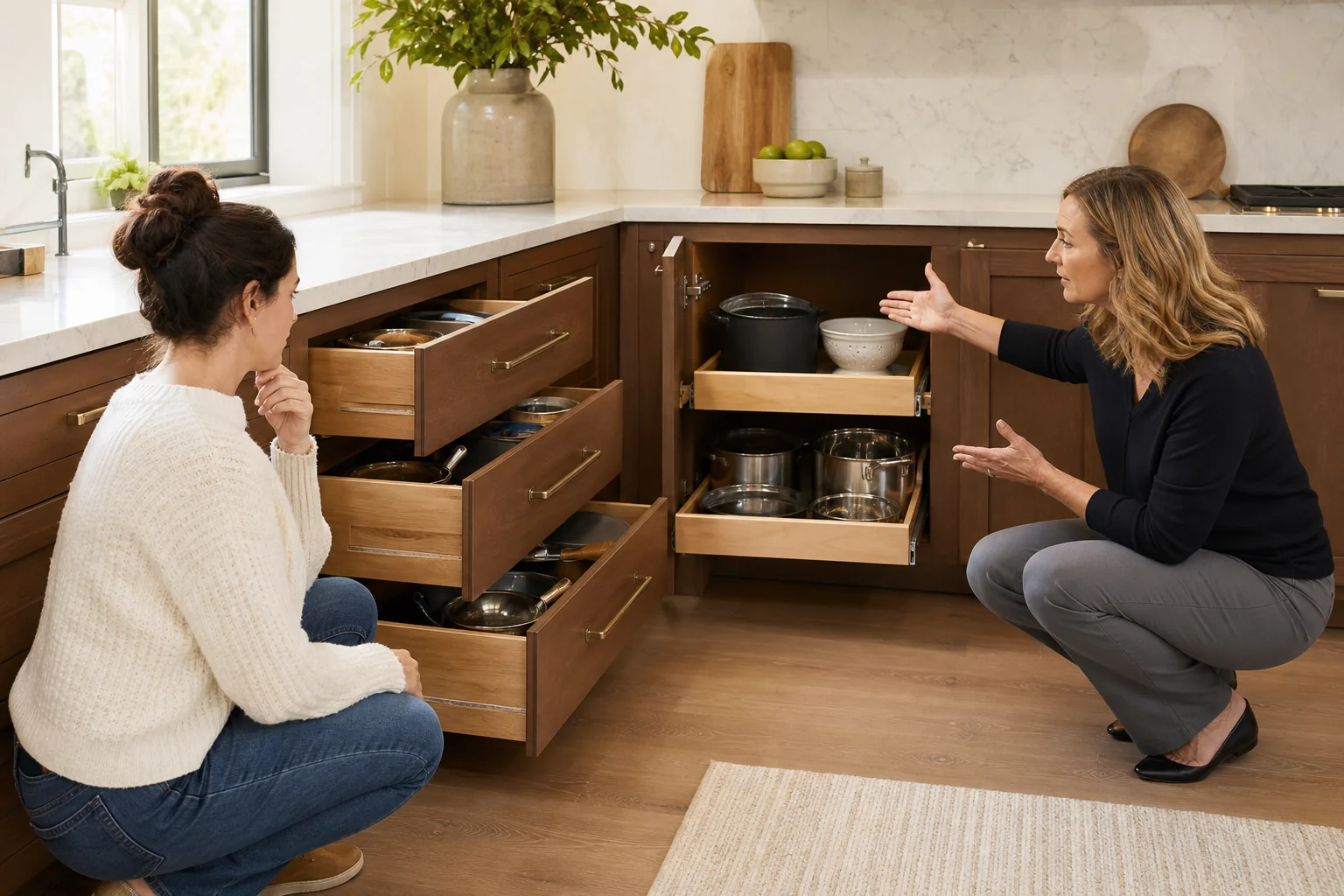
Why drawers win so many converts
A drawer brings the entire contents into view. Heavy pots can be lifted upward instead of pulled from the back of a shelf, and a three-drawer stack naturally separates utensils, everyday cookware and larger pieces.
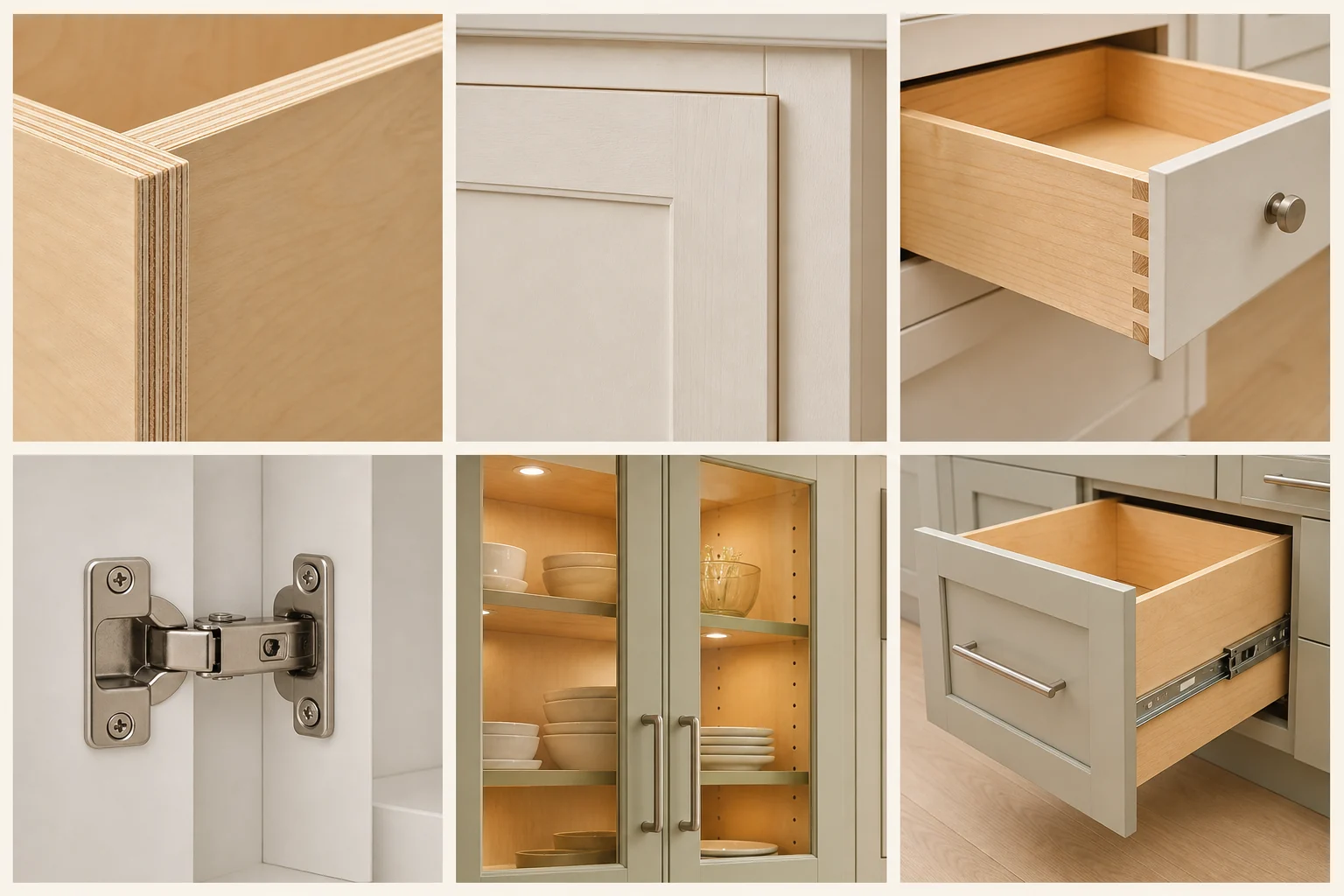
Useful capacity depends on the drawer box, glides and plumbing—not just the cabinet width. Verify interior height and load needs before deciding what belongs there.
Where doors still make sense
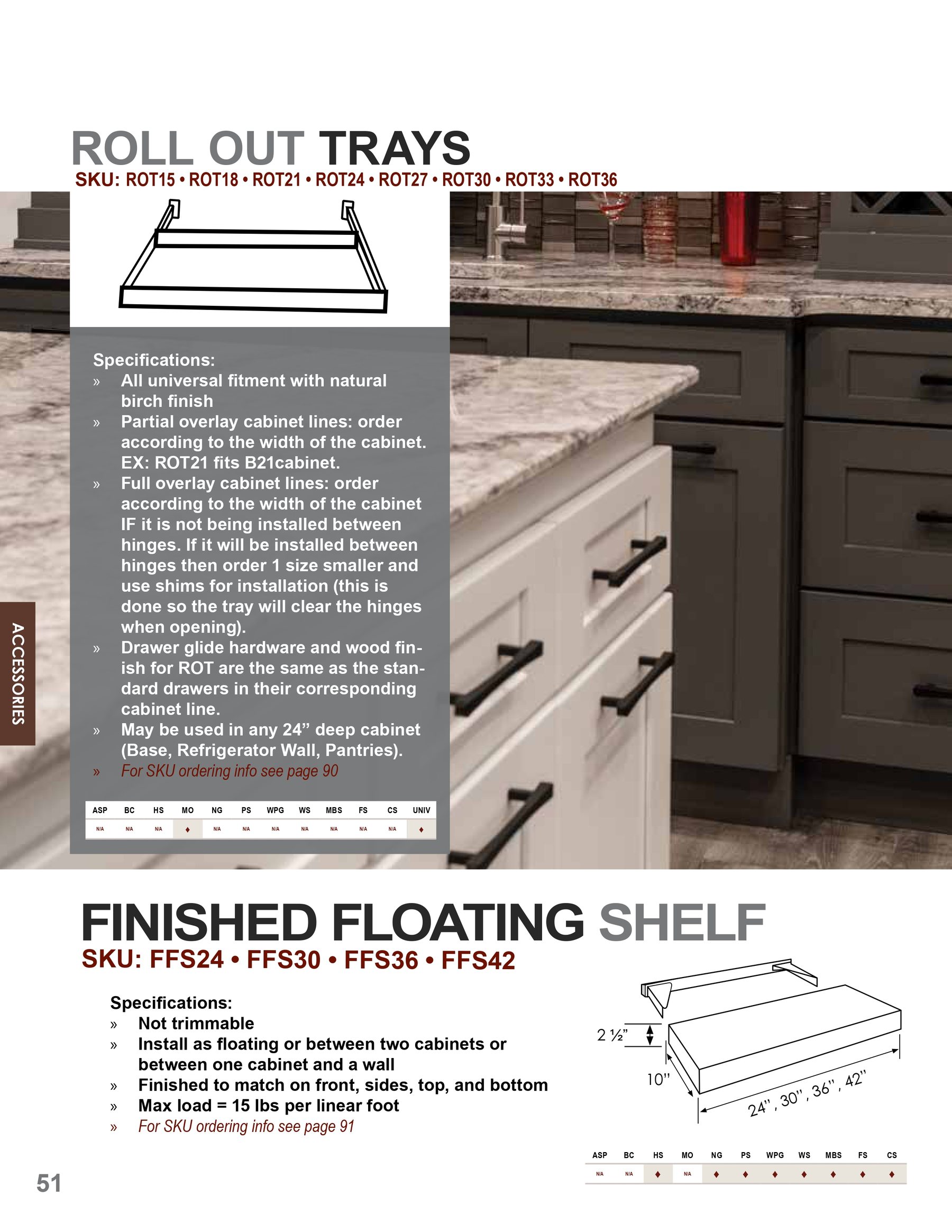
Sink bases must accommodate plumbing and service access. Extra-tall appliances, cleaning equipment and adjustable shelves may also fit better behind doors. Rollout trays can improve access when a traditional door-front appearance is preferred.
Remember the sequence: doors open first, then the rollout. Beside walls or appliances, fillers and hinge clearance determine whether that sequence works comfortably.
Choose by what lives inside
Do not make a blanket rule for the entire kitchen. List the contents of each base cabinet, how often they are used and whether they are easier to lift from above or reach from the front.
A thoughtful kitchen often mixes drawer stacks, a sink base, a trash pullout and a small number of door cabinets instead of repeating one configuration everywhere.